

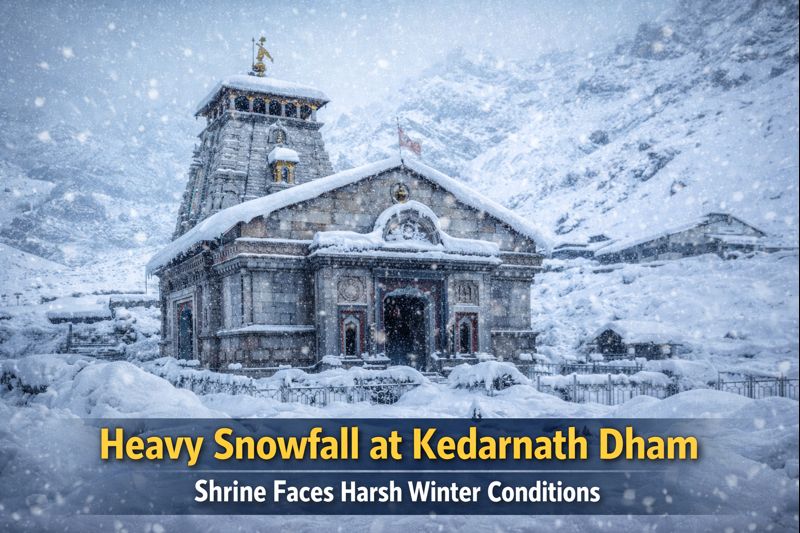
Heavy snowfall has engulfed Kedarnath Dham in Uttarakhand, covering the sacred temple and surrounding areas in a thick layer of snow as winter tightens its grip at the start of the New Year. The persistent snowfall has led to harsh weather conditions, significantly affecting daily life in the region. Continuous Snowfall Intensifies Cold in Kedarnath
Heavy snowfall has engulfed Kedarnath Dham in Uttarakhand, covering the sacred temple and surrounding areas in a thick layer of snow as winter tightens its grip at the start of the New Year. The persistent snowfall has led to harsh weather conditions, significantly affecting daily life in the region.
Continuous Snowfall Intensifies Cold in Kedarnath Region
Extreme Weather Impacts Normal Life
According to officials, continuous snowfall since Friday afternoon has caused a sharp drop in temperatures, resulting in biting cold and difficult living conditions around the shrine. The entire Kedarnath valley remains blanketed in snow, making movement challenging and disrupting routine activities.
The severe weather has also affected ongoing reconstruction and development work at the temple site. Accumulated snow and freezing temperatures have slowed construction progress, delaying several planned infrastructure activities.
Temple Portals Closed for Winter Season
Kedarnath Dham Shut Since October 2025
The portals of Kedarnath Dham, one of the 12 Jyotirlingas of Lord Shiva, were officially closed for the winter season on October 23, 2025, coinciding with Bhai Dooj. The ceremonial closure took place at 8:30 am following traditional rituals.
Before the closure, the temple complex was decorated with flowers, and devotional chants of “Jai Baba Kedar” echoed across the area. Despite the cold, nearly 10,000 devotees gathered to witness the sacred ceremony, accompanied by devotional music performed by the Indian Army band.
Sacred Rituals Mark Seasonal Closure
Shivling Adorned in Samadhi Form
As part of the closing rituals, the swayambhu Shivling of Lord Kedarnath was adorned with local sacred flowers, including Brahmakamal, Kumja, Bukla, and Rakh, along with dried leaves. The decorations symbolized the samadhi form of the deity.
Following the rituals, the sanctum doors were closed for the winter season amid spiritual chants and prayers.
Badrinath Dham Also Closed for Winter
Another Major Shrine Sealed Due to Snow
Meanwhile, the portals of Shri Badrinath Dham were closed on November 25, 2025, as winter conditions intensified in the upper Himalayan region. Badrinath holds immense significance for Vaishnavites, being one of the 108 Divya Desams and part of the revered Panch Badri temples.
Architectural Significance of Badrinath Temple
Ancient Design and Sacred Idols
The Badrinath temple, standing nearly 50 feet tall, features a distinctive gold-gilded roof and a small cupola. The shrine consists of three main sections—the Garbha Griha, Darshan Mandap, and Sabha Mandap.
The sanctum houses idols of Lord Badari Narayan, along with Nar, Narayan, Kuber, Narad Rishi, and Udhava, totaling 15 sacred idols. Opposite the main shrine sits the idol of Garud, the divine vehicle of Lord Vishnu, placed in a prayer posture.
Winter Conditions to Persist in Upper Himalayan Shrines
With continued snowfall and sub-zero temperatures, pilgrimage activities remain suspended until the temples reopen in spring. Authorities continue to monitor weather conditions while ensuring the safety of infrastructure and personnel in the region.











Leave a Comment
Your email address will not be published. Required fields are marked with *